Hormone disruptors are chemicals that interfere with how your body’s hormones send messages.
They don’t destroy hormones—but they can confuse, block, or imitate them. Over time, repeated exposure may affect growth, mood, metabolism, skin, and overall health—making awareness more important than fear.
Let’s Talk About the Messages Your Body Lives By
Most people think of hormones as something distant.
Invisible. Complicated. Only relevant when something feels “wrong.”
However, hormones are actually working for you every single day.
They help you wake up. Focus. Digest. Sleep. Adapt. Heal.
And hormone disruptors?
They don’t destroy your hormones. They confuse the messages.
Quietly. Slowly. Often without dramatic symptoms.
No scare tactics here.
Just facts, explained clearly.
Because the truth is, many of us are exposed to hormone-disrupting chemicals daily—through food, water, air, and personal care routines—without ever being told what that really means.
Let’s break it down. Simply.
What Are Hormones, in Everyday Terms?
Think of hormones as text messages inside your body.
“Wake up.”
“Release energy.”
“Grow.”
“Calm down.”
They travel through your bloodstream and tell organs what to do and when to do it.
Your body depends on clear communication.
Even small signal errors can throw things off balance.
This is why hormonal health isn’t abstract—it’s foundational.
What Are Hormone Disruptors?
Hormone disruptors—also known as endocrine disruptors—are chemicals that interfere with how hormones communicate.
They can:
- Mimic hormones
Acting like a real hormone and sending a false signal. - Block hormones
Preventing the real message from being received. - Alter hormone levels
Causing the body to release too much or too little.
Importantly, the impact is often subtle, not dramatic.
This isn’t about instant illness.
It’s about long-term interference.
Why Hormone Disruptors Are Hard to Spot
Here’s what most people aren’t told.
Hormone disruptors usually don’t cause obvious, immediate symptoms.
They work quietly.
This happens because:
- Effects may take years to appear
- Exposure often happens in small doses
- Symptoms can look “normal” or unrelated
As a result, people blame stress, age, or lifestyle—without ever seeing the full picture.
That’s why education matters more than panic.
Where Are Hormone Disruptors Commonly Found?
Let’s bring this into real life—especially relevant for Pakistan and similar environments.
1. Food and Food Packaging
Certain chemicals can migrate into food from:
- Plastic containers
- Plastic wrap
- Takeaway packaging
- Cans with specific linings
Heat and storage time increase this transfer.
It’s not about fear—it’s about frequency.
2. Water Exposure
Water may carry trace chemicals from:
- Industrial runoff
- Old plumbing systems
- Agricultural sources
This does not mean water is “toxic.”
It means long-term, low-level exposure matters from a public health perspective.
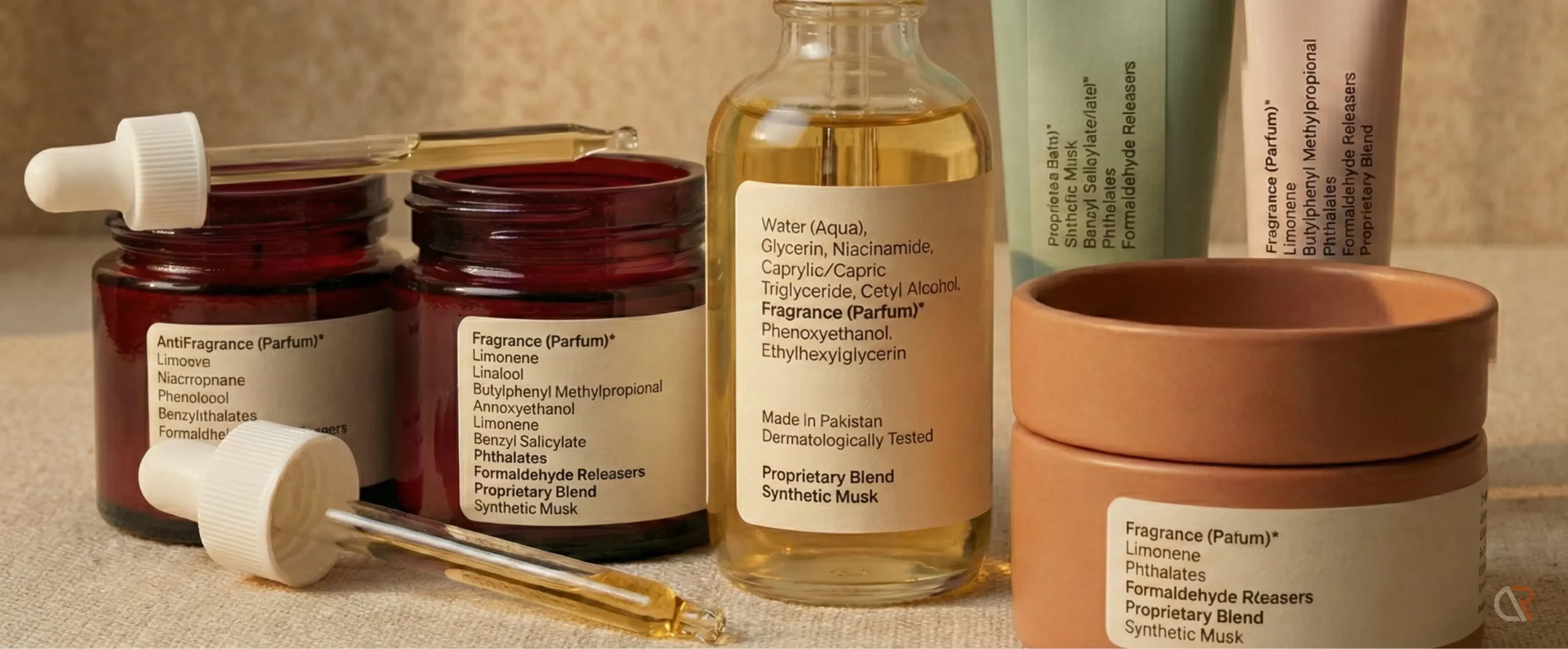
3. Household & Personal Care Products
Some everyday items may contain hormone-interfering substances, including:
- Fragranced products
- Cleaning agents
- Air fresheners
- Certain cosmetics and skincare products
This blog stays educational.
No brand shaming. No ingredient panic.
Just awareness.
How Hormone Disruptors May Affect the Body
Different hormones control different systems.
Disruption may influence:
- Growth and development
- Energy and metabolism
- Mood and focus
- Skin and oil balance
- Sleep cycles
However, here’s the grounding truth:
This is about potential influence, not guaranteed harm.
Science studies risk patterns, not fear-based absolutes.
Why Children and Teens Deserve Special Awareness
Children are not just “small adults.”
Their bodies are:
- Growing rapidly
- More sensitive to hormonal signals
- Still developing regulatory systems
This doesn’t mean panic.
It means better education and informed choices.
Awareness is protection.
The Biggest Myth: “Natural Means Safe”
Let’s say this clearly.
Natural does not automatically mean hormone-safe.
And synthetic does not automatically mean harmful.
What truly matters is:
- Dose
- Frequency of exposure
- Scientific evidence
Some natural substances can interfere with hormones.
Some synthetic ones are well-studied and safe.
Marketing creates confusion.
Science creates clarity.
Why This Topic Belongs in Clean Beauty Conversations
Skin isn’t just a surface.
It’s an absorptive organ.
Repeated exposure matters more than one-time use.
That’s why clean beauty isn’t about perfection.
It’s about ingredient awareness without fear.
You deserve transparency—not anxiety.
What Science Actually Says (Without Jargon)
Research shows that some chemicals can interact with hormone receptors.
However:
- Not all exposure causes harm
- Not all people respond the same way
- Evidence is reviewed over time
Public health guidance evolves.
Safer formulations are encouraged.
Science doesn’t deal in extremes.
It deals in probability, patterns, and prevention.
What You Can Do—Without Stress
This is not about overhauling your life.
It’s about progress, not perfection.
Simple steps that matter:
- Be mindful of repeated exposure
- Reduce unnecessary plastic use when possible
- Ventilate indoor spaces
- Read labels with curiosity, not fear
Small changes protect more than dramatic overreactions ever will.
Why Understanding Hormone Disruptors Is Empowering
Because confusion creates anxiety.
And clarity creates control.
When you understand:
- How hormones work
- How disruption happens
- Where exposure comes from
You stop feeling helpless.
Knowledge is protective.
Final Takeaway: What This Means for You
Hormone disruptors are chemicals that interfere with hormone signaling by mimicking, blocking, or altering natural hormone messages. They are commonly found in food packaging, water, household products, and personal care items. Effects depend on exposure, timing, and individual sensitivity. Scientific understanding supports awareness—not fear—and encourages informed, preventive choices.
Call to Action
You don’t need to be perfect.
You just need to be informed.
If this brought clarity, share it.
If it raised questions, ask them.
And if you’re tired of fear-based health content—
Welcome to The Beauty Rebels.
lass=”yoast-text-mark” />>We choose facts. We choose calm. We choose power through knowledge.
Frequently Asked Questions (FAQs)
What are hormone disruptors in simple words?
They are chemicals that confuse how your body’s hormones communicate.
Are hormone disruptors dangerous?
Some may increase health risks over time, depending on exposure and sensitivity.
Where do hormone disruptors come from?
They can come from food packaging, water, household items, and personal care products.
Can skincare affect hormones?
Repeated skin exposure to certain ingredients may influence hormone signaling.
Should I be worried?
No panic needed. Awareness and informed choices are enough