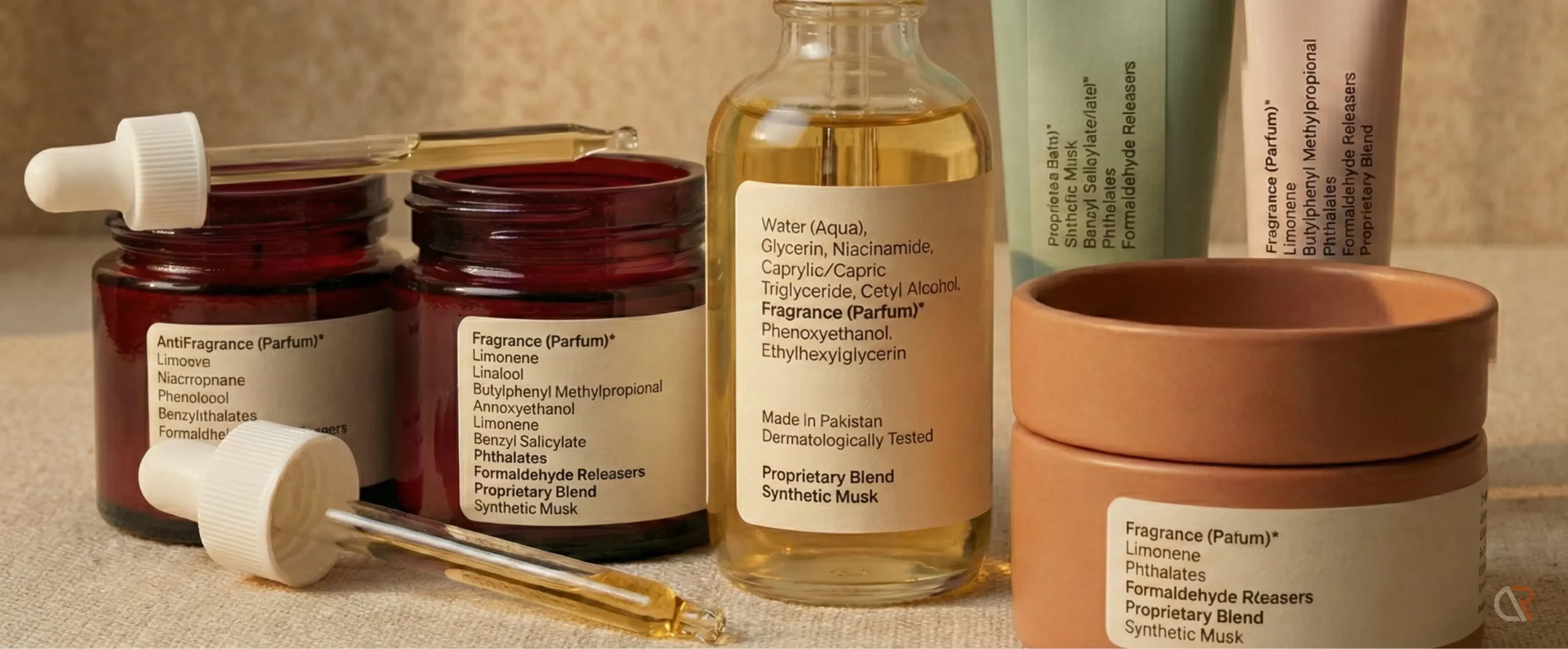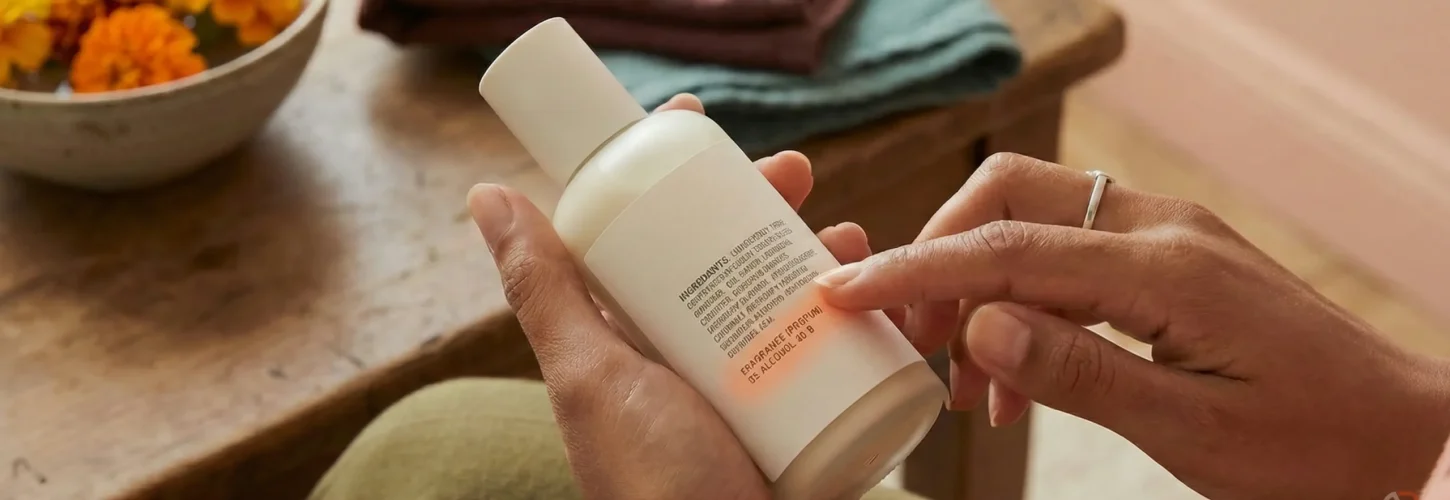
Skincare routines often include hidden irritants. The six everyday ingredients to avoid are artificial fragrance (parfum), harsh sulfates (SLS/SLES), drying denatured alcohols (alcohol denat, SD alcohol), parabens (methyl-, propyl-, butyl-), formaldehyde-releasing preservatives and heavy occlusives like mineral oil. These ingredients can trigger irritation, weaken the skin barrier, and worsen acne or sensitivity. Avoiding these six common ingredients — and switching to safer alternatives — can dramatically improve skin health, especially in Pakistan’s climate without expensive routines.
A Truth Most People Aren’t Told
I’ve seen this pattern not in a clinic — but on my own skin.
Burning. Sudden breakouts. Products that once worked but slowly stopped. Labels that promised “gentle” or “for sensitive skin,” yet left my face irritated and reactive.
For a long time, I thought my skin was the problem.
But it wasn’t.
It was the ingredients hiding in plain sight.
Living with eczema, sensitive skin, and a known hypersensitivity to fragrance forces you to pay attention. Over time, I learned that many everyday skincare products — even popular, well-loved ones — contain ingredients that quietly disrupt the skin barrier.
Most people trust labels like gentle, dermatologist-tested, or for sensitive skin. However, these terms aren’t regulated the way we assume. As a result, irritating or sensitising ingredients often slip through — especially in face washes, moisturisers, and sunscreens used daily.
This isn’t about fear.
And it’s not about blaming your skin.
So let’s break this down calmly and honestly.
No shame. No scare tactics. Just facts — and simple, safer swaps you can start making today.
Why Ingredient Awareness Matters (Especially in Pakistan)
Our skin faces heat, pollution, humidity, and over-cleansing daily. Therefore, ingredients that may seem “normal” elsewhere can quietly damage the skin barrier here.
When the barrier weakens:
- Acne worsens
- Pigmentation deepens
- Sensitivity increases
- Products stop working
Understanding ingredients isn’t about perfection.
Instead, it’s about protecting your skin long-term.
1. Fragrance (Parfum)
Why It’s a Problem
Fragrance is one of the top causes of contact dermatitis worldwide. Even when it smells lovely, it’s often a blend of dozens of undisclosed chemicals.
As a result, fragrance can:
- Trigger redness and itching
- Worsen acne and rosacea
- Sensitise skin over time
Importantly, reactions may appear months later, not instantly.
Easy Swap
- Choose fragrance-free or no added perfume
- Look for calming ingredients like:
- Oat extract
- Panthenol
- Aloe vera
Doctor’s note: Unscented ≠ fragrance-free. Always check the ingredient list.
2. Harsh Sulfates (SLS / SLES)
Why They’re a Problem
Sulfates create foam — but they also strip natural oils. Consequently, the skin overcompensates by producing more oil, leading to breakouts.
Common effects include:
- Tightness after washing
- Increased oiliness later
- Compromised skin barrier
Easy Swap
- Use sulfate-free cleansers
- Look for gentler surfactants like:
- Coco-glucoside
- Sodium cocoyl isethionate
Truth bomb: Clean skin should feel comfortable — not squeaky.
3. Drying Alcohols (Alcohol Denat, SD Alcohol)
Why They’re a Problem
These alcohols evaporate quickly. Therefore, they give a temporary “fresh” feeling while silently dehydrating skin.
Over time, they:
- Increase sensitivity
- Worsen pigmentation
- Accelerate barrier damage
Easy Swap
- Choose alcohol-free toners and serums
- Prefer humectants like:
- Glycerin
- Hyaluronic acid
Note: Fatty alcohols (like cetyl or cetearyl alcohol) are safe and moisturising.
4. Parabens (Methyl-, Propyl-, Butyl-)
Why They’re Controversial
Parabens are preservatives. While not all are dangerous, frequent exposure raises concerns about hormone disruption, especially in long-term use.
Although research continues, many people choose a more cautious approach — especially teens, those who are pregnant, and people with hormonal acne.
Easy Swap
- Choose paraben-free formulas
- Look for modern preservatives like:
- Phenoxyethanol (within safe limits)
- Sodium benzoate
Balanced truth: Preservation matters. Unsafe preservation is worse than none.
5. Formaldehyde-Releasing Preservatives
Why They’re a Problem
These preservatives release small amounts of formaldehyde over time. Consequently, they are linked to irritation and allergic reactions.
Common names include:
- DMDM hydantoin
- Imidazolidinyl urea
- Quaternium-15
Easy Swap
- Opt for low-irritation preservative systems
- Especially important for:
- Eczema-prone skin
- Children and teens
6. Heavy Occlusives (Like Mineral Oil & Petrolatum)
Why They Can Be a Problem
Mineral oil and petrolatum aren’t toxic. However, they are very heavy occlusives that completely seal the skin.
For many people — especially those with acne-prone, sensitive, or eczema-prone skin, or those living in hot, humid climates — this can trap heat, sweat, and bacteria. As a result, skin may feel itchy, congested, or break out over time.
Easy Swap
- Choose lighter, breathable barrier support, such as:
- Squalane
- Ceramides
- Lightweight silicones (like dimethicone)
Bottom Line: These ingredients can help during short-term skin barrier repair, but for daily facial use, they’re often too heavy. Balanced skin needs protection — not suffocation.
How to Switch Without being Overwhelmed
You don’t need to throw everything away.
Instead:
- Replace one product at a time
- Start with cleanser or moisturiser
- Patch test every new product
- Keep routines simple
Consistency heals skin. Not complexity.
Final Takeaway: What This Means for You
This guide explains six everyday skincare ingredients to avoid: fragrance, sulfates, drying alcohols, parabens, and formaldehyde releasers. It provides evidence-based reasons, skin barrier science, and affordable, accessible swaps suitable for sensitive, acne-prone, and Pakistani skin types.
Call to Action
Your skin isn’t “problematic.”
It’s responding intelligently to what you put on it.
Clarity changes everything. And sometimes, clarity starts with understanding the ingredients hiding behind the label.
If you want extra support, you can also explore ToxinLen AI — a tool designed to help decode skincare ingredient lists and flag potential irritants, especially for sensitive or reactive skin. Think of it as a second pair of eyes, not a rulebook.
If this guide helped you, share it, comment your questions, or join The Beauty Rebels community — where informed choices always come before trends, and your skin’s needs come first.
Frequently Asked Questions (FAQs)
What ingredients should I avoid in skincare?
Artificial fragrance (parfum), harsh sulfates (SLS / SLES), drying alcohols (denatured alcohol, SD alcohol), certain parabens (methyl-, propyl-, butyl-), formaldehyde-releasing preservatives and heavy occlusives (like mineral oils and petrolatum) are common irritants.
Are fragrance-free products better for sensitive skin?
Yes. Fragrance-free products significantly reduce the risk of irritation and allergic reactions.
Do expensive products mean safer ingredients?
No. Ingredient quality matters more than price or branding.
Can teens use clean skincare?
Absolutely. In fact, teens benefit the most from gentle, barrier-protective formulas.